
AURA starts compact.
AURAs package an antimicrobial payload inside nanoscale, ultrasound-responsive carriers designed to remain stable until an acoustic trigger arrives.
Nanoscale carrierDrug loadedExternally triggered
Transforming how antibiotics reach chronic infections.
AURAs package an antimicrobial payload inside nanoscale, ultrasound-responsive carriers designed to remain stable until an acoustic trigger arrives.
Before activation, the small carriers are designed to distribute through the dense biofilm environment and bring antibiotic closer to protected bacteria.
Therapeutic ultrasound triggers a rapid liquid-to-gas transition, creating transient microbubbles that oscillate and generate mechanical force at the treatment site.
The same local event disrupts the protective architecture and releases antibiotic near newly exposed bacteria—combining physical access with precision delivery.

This visual follows bacteria from first attachment to a mature, protected community. As you scroll, the infection becomes denser, the matrix thickens and antibiotic access becomes harder.
Free-living bacteria settle on damaged tissue or a device surface. The first cells establish a foothold and begin recruiting a community around them.
The infection starts as individual cells.The attached bacteria multiply, communicate and organise into mixed populations. Their behaviour begins to differ from bacteria floating freely in fluid.
A coordinated community is harder to clear.The community produces an extracellular polymeric substance containing sugars, proteins and DNA. This physical network holds the biofilm together and slows transport through it.
The matrix becomes a transport barrier.Deep within the mature biofilm, low-activity cells, chemical gradients and resistance mechanisms can survive treatment and seed recurrence.
The result is tolerance, relapse and chronic inflammation.
AURAs are nanoscale carriers designed to move through the biofilm matrix.
Therapeutic ultrasound triggers a rapid liquid-to-gas phase change, forming transient microbubbles within the biofilm.
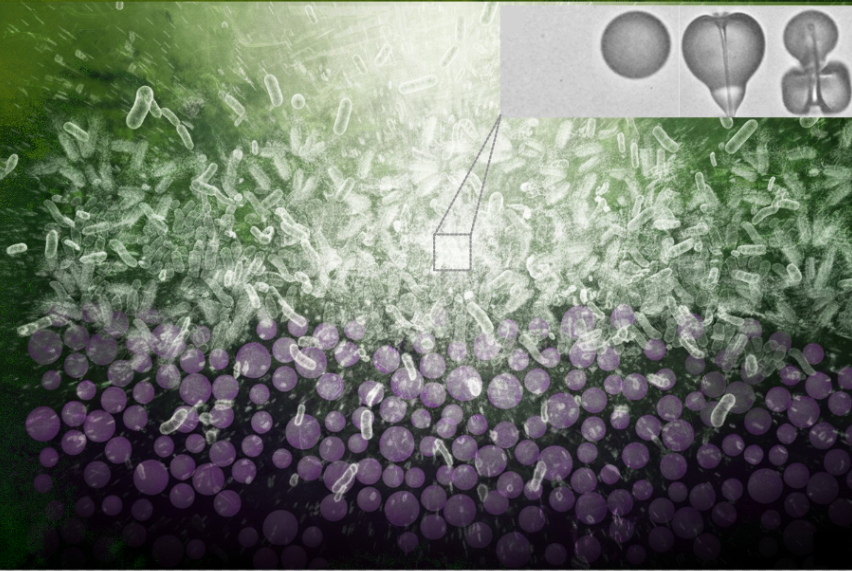
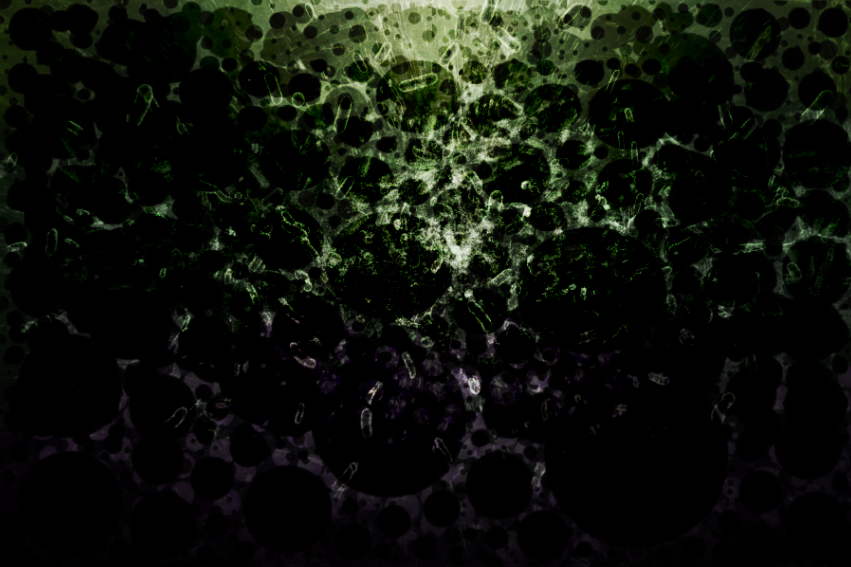
Bubble oscillation and cavitation generate local mechanical forces that disrupt the matrix and improve transport through the biofilm.
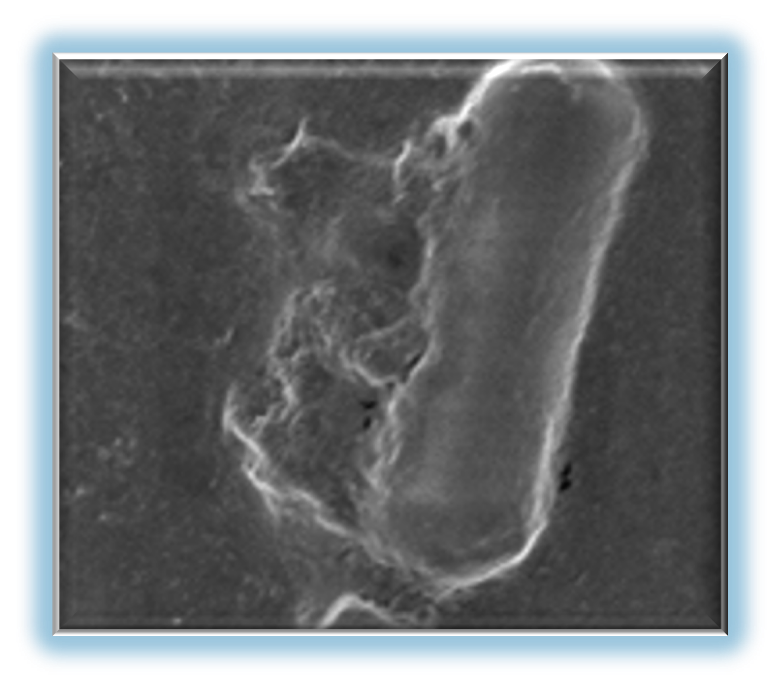
The loaded antibiotic is released close to exposed bacteria, increasing local delivery and intracellular accumulation.